


Key Takeaways
- DME must be durable, serve a medical purpose, not be useful to a healthy person, and be appropriate for home use.
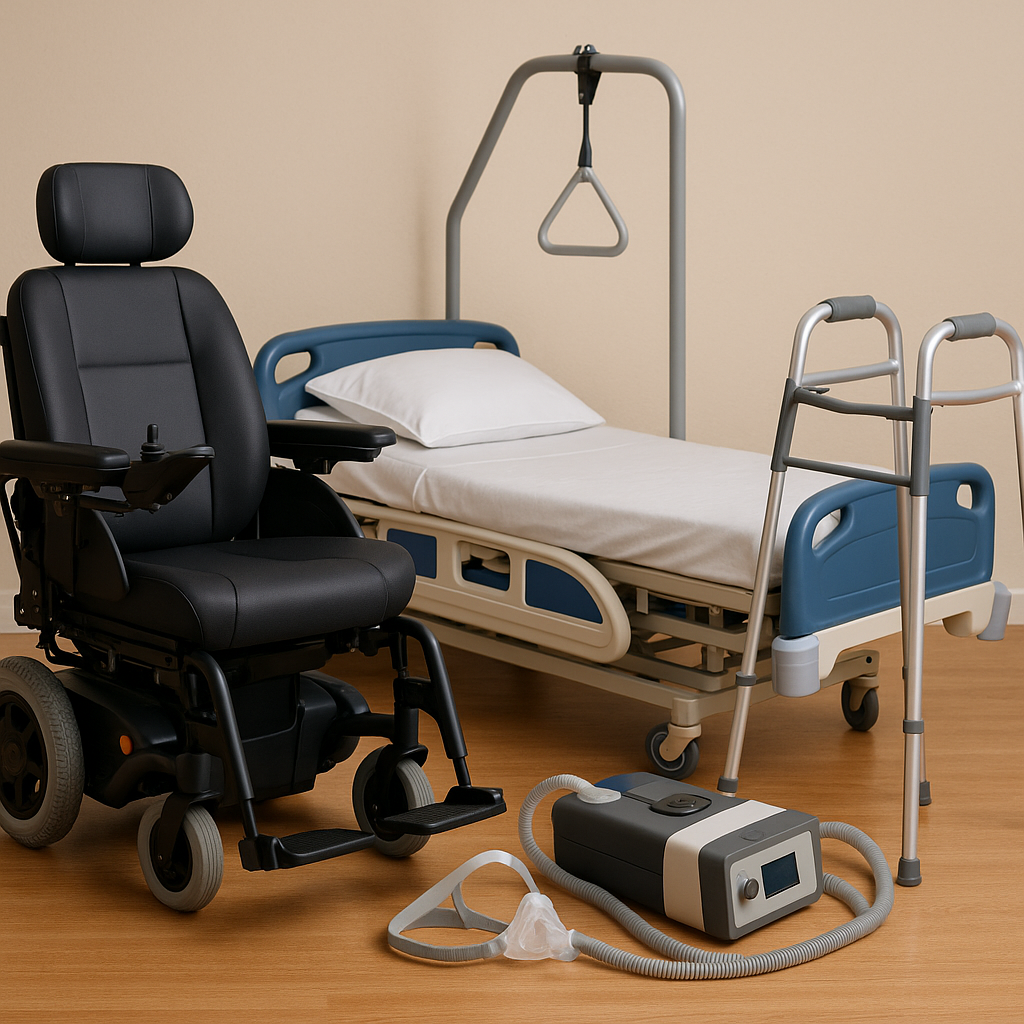
- Common DME includes mobility aids (wheelchairs, scooters), respiratory equipment (CPAP, oxygen concentrators), diabetes management supplies, and supportive equipment (hospital beds).
- Understanding the difference between DME and Home Medical Equipment (HME) is crucial for coverage.
- Items for comfort or convenience typically do not qualify as DME.
- Specific documentation and physician orders are often required for DME coverage, especially for items like power wheelchairs.
What Is Durable Medical Equipment?
More than 67 million Americans rely on Medicare today, and for a growing number of them, access to the right medical equipment at home makes the difference between independence and institutionalized care.
Yet many beneficiaries discover gaps in their understanding of [durable medical equipment](/faqs/does-medicare-cover-durable-medical-equipment/) only after a claim is denied or a bill arrives unexpectedly.
Defining DME
Medicare uses a specific four-part test to define DME: it must be durable enough for repeated use, serve a primarily medical purpose, not be useful to someone healthy, and be appropriate for use in a home setting. All criteria must be met.
You may also hear the term home medical equipment (HME). HME is a subset of DME focused exclusively on devices used in the home. All HME qualifies as DME, but not all DME is HME.
Some equipment used in clinical or outpatient settings may also fall under the DME category depending on context. Understanding this distinction matters because only equipment meeting the full definition qualifies for Medicare DME coverage and private insurance reimbursement.
DME Market Growth
The U.S. DME market was valued at over $60 billion in 2025, with projected growth exceeding 6% annually through 2030. This growth is driven by an aging Baby Boomer population and a strong shift toward home-based care.
Types of Durable Medical Equipment: What Qualifies?
The range of items that qualify as DME is broader than many people realize. Medicare and most private insurers recognize several major categories of home medical devices:
Mobility aids: Manual wheelchairs, power wheelchairs, and motorized scooters
Respiratory equipment: CPAP and BiPAP machines, oxygen concentrators, and nebulizers
Diabetes management: Blood glucose monitors and related supplies
Supportive equipment: Hospital beds, patient lifts, and traction equipment
Ambulatory aids: Walkers, crutches, and canes
Infusion therapy: External infusion pumps for medication delivery
Power wheelchairs are among the most frequently misunderstood DME categories. Coverage requires a face-to-face examination, a detailed written order from a Medicare-enrolled physician, and documentation establishing that the patient cannot use a less complex mobility device.
Power Wheelchair Coverage
The documentation burden for power wheelchairs is real and must be thorough. Missing required documentation can lead to claim denials.
Equally important is knowing what does not qualify. Items primarily for comfort or convenience, such as air conditioners, raised toilet seats without a specific medical indication, or standard grab bars, generally fall outside the DME definition.
Disposable supplies and equipment unsuitable for repeated home use are also excluded. Dr. Melanie Whittington, a physical medicine and rehabilitation specialist, notes that proper functional assessment before prescribing DME is critical.
Matching Equipment to Patient
Matching the right equipment to the right patient demonstrably improves recovery outcomes and reduces the risk of rehospitalization.
How Medicare Part B Covers Durable Medical Equipment in 2026
[Medicare Part B](/faqs/medicare-costs-in-2026-premiums-deductibles-and-key-changes/) is the primary payer for DME for eligible beneficiaries. In 2026, the standard Part B monthly premium is $202.90, and the annual deductible is $283.
Once you meet the deductible, Medicare pays 80% of the Medicare-approved amount, and you are responsible for the remaining 20% coinsurance.
| Cost Type | Amount |
|---|---|
| Standard Monthly Premium | $202.90 |
| Annual Deductible | $283 |
| Medicare Pays | 80% of approved amount |
| Your Coinsurance | 20% of approved amount |
Here's a simple example: if a piece of equipment has a Medicare-approved amount of $1,000, you would pay $200 out of pocket (assuming the deductible has already been met).
For higher-cost equipment like power wheelchairs, that 20% can add up quickly, which is why supplemental coverage matters. One nuance many beneficiaries miss is the rental versus purchase structure for certain DME.
Rental vs. Purchase
Oxygen equipment, for instance, is typically rented rather than purchased outright. Some other items, like certain wheelchairs and hospital beds, transition from rental to patient ownership after 13 continuous months of rental payments.
The CMS DME Competitive Bidding Program has saved Medicare billions by establishing payment rates through a competitive process among qualified suppliers.
While this controls costs effectively, Medicare policy analyst Laurie Novak cautions that ongoing monitoring is needed to ensure supplier availability is not compromised in rural or underserved areas.
Medicare Advantage and DME: What You Need to Know
If you are enrolled in a Medicare Advantage (Part C) plan, your plan is required to cover the same core DME benefits as Original Medicare.
However, the way those benefits are administered can differ significantly. Many MA plans require prior authorization before equipment is approved, and most restrict coverage to suppliers within their network.
Financial Protection with MA
One meaningful financial protection in 2026: the Medicare Advantage maximum out-of-pocket limit is $9,250. DME cost-sharing counts toward this cap, providing a ceiling on what you could spend in a benefit year, something Original Medicare alone does not offer.
Some Medicare Advantage plans go further, offering supplemental DME benefits beyond Original Medicare's standard coverage. This might include reduced cost-sharing on specific devices or coverage for certain home medical equipment that Original Medicare would not pay for.
Before Ordering DME with MA
Before ordering any equipment, review your plan's Evidence of Coverage (EOC) document carefully. Calling your plan's member services line before placing an order can prevent unexpected bills and ensure the supplier you choose is in-network. You can learn more about Medicare benefits structure to understand how DME fits into your overall coverage.
How to Qualify for DME Coverage: Steps to Follow
Qualifying for DME coverage under Medicare or private insurance requires more than just a doctor recommending equipment. There is a defined process, and gaps at any step can result in denied claims.
Obtain a written prescription or order from a Medicare-enrolled physician or treating provider who has performed a face-to-face examination within a required timeframe.
Establish documented medical necessity: this means your medical records must support that the equipment is required to treat an illness or injury, improve function, or prevent deterioration of a condition. Understanding what medically necessary means in Medicare's framework is essential here.
Obtain a Certificate of Medical Necessity (CMN) for specific equipment categories that require one, such as oxygen therapy and power wheelchairs.
Select a Medicare-enrolled DME supplier: this is non-negotiable if you want Medicare to reimburse the claim.
Verify your diagnosis codes align with the equipment being ordered and that all documentation is complete before submission.
Documentation is Key
Wayne van Halem, a Medicare compliance expert and auditor, emphasizes that documentation gaps are the primary driver of DME audit failures and improper payment findings. Complete, consistent records protect both the patient and the supplier.
How to Get DME Covered by Private Insurance
Private insurance DME coverage follows similar medical necessity principles to Medicare, but the specifics vary considerably by plan. Deductibles, coinsurance rates, and approved equipment lists differ across commercial carriers, so reviewing your Summary of Benefits before submitting a request is time well spent.
Most private insurers require prior authorization for higher-cost DME items. Triggering factors typically include cost thresholds, equipment category, or the treating diagnosis.
Appealing Denials
When submitting for authorization, include clinical notes, the physician's written order, and any functional assessments that support medical necessity. If a claim is denied, you have the right to appeal, and providing additional clinical documentation at that stage often reverses the decision.
For Medicare beneficiaries, Medigap (Medicare Supplement) plans can meaningfully reduce out-of-pocket DME costs. Plan G, one of the most popular Medigap options, covers the 20% Part B coinsurance for DME after the $283 annual deductible is met.
The High-Deductible Plan G carries a higher threshold, a $2,950 deductible in 2026, before benefits begin, making it a better fit for beneficiaries who prefer lower monthly premiums and are comfortable absorbing initial costs.
Complex Needs? Contact Case Management
For complex or high-cost equipment needs, contact your insurer's case management team or DME benefit coordinator directly. They can often identify coverage pathways that are not obvious from the standard plan documents.
Finding the Right DME Suppliers: What to Look For
Choosing the right medical equipment supplier is not just a convenience issue, it directly affects whether Medicare will pay. If a supplier is not enrolled with Medicare, your claim will not be reimbursed, leaving you fully responsible for the cost regardless of medical necessity.
Verifying Suppliers
Medicare.gov's supplier finder tool allows you to search for Medicare-enrolled DME suppliers by ZIP code, verify their enrollment status, and check accreditation. CMS requires all Medicare-enrolled DME suppliers to hold accreditation from a CMS-approved accrediting organization.
Industry bodies like AAHomecare (American Association for Homecare) and NAMES (National Association of Medical Equipment Services) promote supplier standards and advocate for patient access.
Tom Ryan, President and CEO of AAHomecare, puts it plainly: home medical equipment keeps people out of more costly care settings and allows patients to live independently, access to qualified suppliers is foundational to that outcome.
Medicare Assignment
When evaluating a medical supply store or supplier, ask whether they accept Medicare assignment. Suppliers who accept assignment agree to Medicare's approved amounts as full payment, which limits your out-of-pocket exposure significantly. For more guidance on verifying coverage details, the Medicare Summary Notice is a key document to review after any DME claim is processed.
Avoiding DME Fraud: Protecting Yourself and Your Benefits
The Office of Inspector General (OIG) has consistently identified DME as one of the highest-risk areas for Medicare fraud. Awareness of common schemes is one of the most practical protections available to you.
Common fraud red flags include:
Unsolicited calls, texts, or door-to-door visits offering "free" equipment in exchange for your Medicare number
Suppliers requesting your Medicare ID without a physician referral or your initiation of contact
Billing for equipment you never received or did not order
Pressure to accept equipment by claiming "Medicare approved it" without a doctor's involvement
Report Fraud
If you encounter suspicious activity, report it to the OIG hotline at 1-800-HHS-TIPS or online at oig.hhs.gov. You can also learn more about reporting Medicare fraud through official channels.
Protect yourself by never sharing your Medicare number unless you initiated the contact, always verifying supplier enrollment before proceeding, and carefully reviewing your Medicare Summary Notice for unfamiliar charges.
The CMS Competitive Bidding Program has reduced fraud exposure by narrowing the eligible supplier pool, but individual vigilance remains essential. Reviewing your Medicare rights and protections can also help you understand what recourse you have when something goes wrong.
Frequently Asked Questions About Durable Medical Equipment
Related Articles
Medicare Part B for Disabled Individuals: Avoid Penalties and Enroll Smartly
9 min read
Medicare Savings Programs: Your Complete Guide to Eligibility & Benefits
5 min read
Medicare Advantage Annual Enrollment Period (AEP): Key Dates and What You Need to Know
10 min read
Medicare Supplement Plans and Pre-Existing Conditions
8 min read
Have Medicare questions?
Our licensed Medicare agents are available to help you find the right coverage.